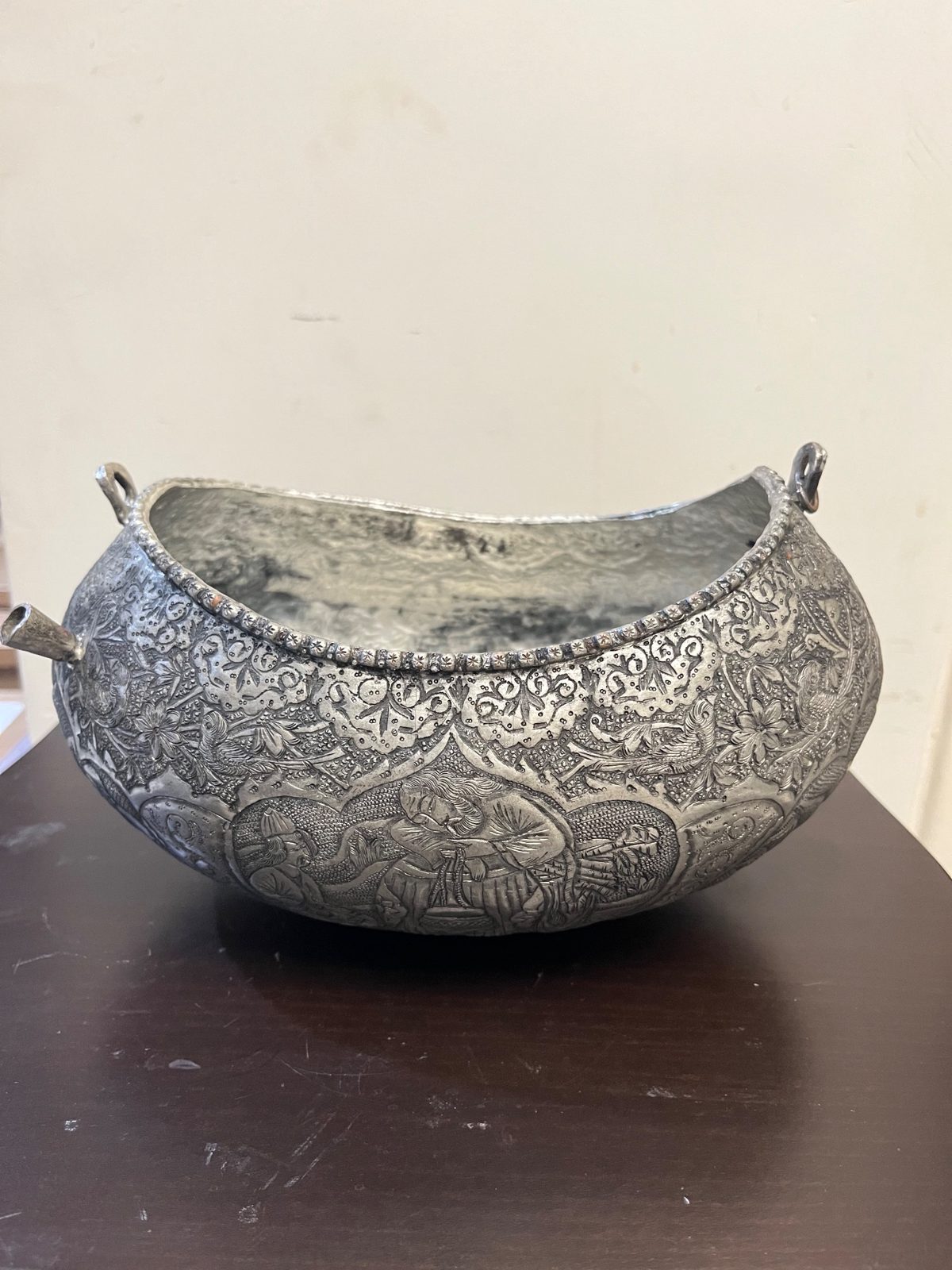
Qajar Engraved Dervish Vessel, 100-130 Years Old
- Price
- ≈ $175.00 / pack
- Minimum order
- 1 pack
- Origin
- Iran
- Supplier
- Bisotun
Product details
1. Material and Manufacturing Technique
Alloy: Given its dark silver-gray color, natural oxidation patina in recesses, and light reflection, this vessel is highly likely made of tinned brass (whitewashed) or, in some similar Qajar-era pieces, 'Nickel Silver' (Varsho) alloy. The interior shows signs of traditional whitewashing and continuous use. (If tested with a magnet, it will not stick as copper, brass, bronze, and Nickel Silver are non-magnetic).
Manufacturing Technique: The main body is crafted by hammering metal sheets (Dovetail/Raised) or bending, with edges skillfully assembled. Small rings at the top and a small side tube suggest it was likely a type of ritual vessel, a Dervish kashkul, or a special decorative water/rosewater sprinkler, designed to be hung or have a strap.
2. Engraving Art and Iconography (Design Analysis)
Style of Depictions: The human figures on the body are very authentic and reminiscent of traditional Persian styles, especially the Isfahan or Shiraz schools during the Qajar period (13th century AH).
Details: Human motifs with long beards, traditional hats, and clothing, along with backgrounds filled with stippled and arabesque micro-patterns (fine detailing and background filling technique), indicate the craftsmanship of a skilled traditional master. In image 5, a man is seen amidst foliage and scroll patterns, engraved with extraordinary precision.
3. Approximate Age
Based on the figurative engraving style, the specific body form, and the extent of oxidation and natural aging of the metal, this piece dates back to the late Qajar period (approximately 100 to 130 years ago) or early Pahlavi I era.
Payment: in USDT. ASL Market holds the payment until you confirm delivery.
Request a quotation for this product · How to import from Iran